STRUCTURES Blog > Posts > Geometry and space engineering tied the knot (Geometry Space Surrey conference)
STRUCTURES Blog > Posts > Geometry and space engineering tied the knot (Geometry Space Surrey conference)
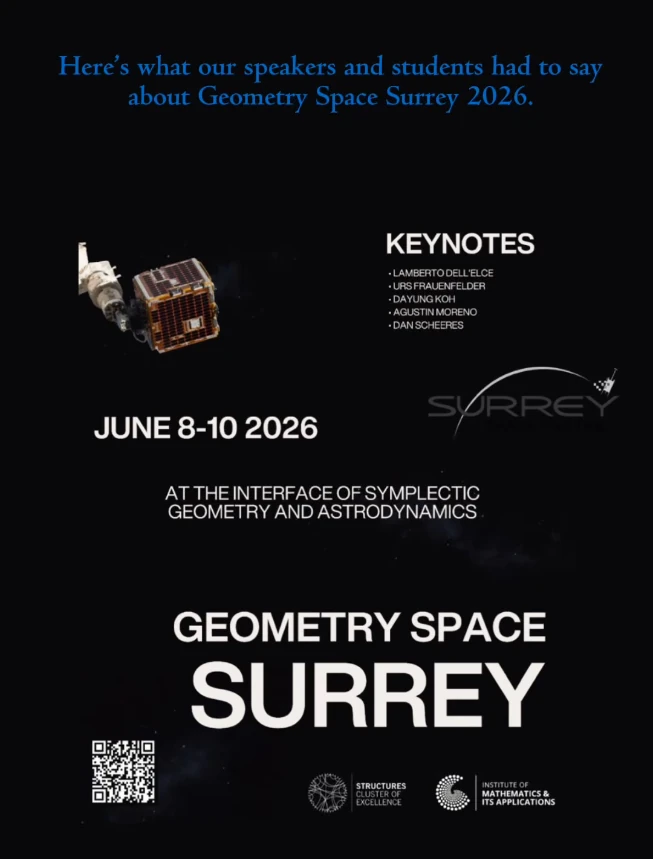
Geometry Space Surrey was a workshop organized at the University of Surrey in June 2026, in cooperation with STRUCTURES. Arthur Limoge, its instigator and a young researcher formerly affiliated with STRUCTURES, reflects back upon this event four months later, and explains how it illustrates a larger ongoing effort to bridge the gap between pure mathematics and space engineering.
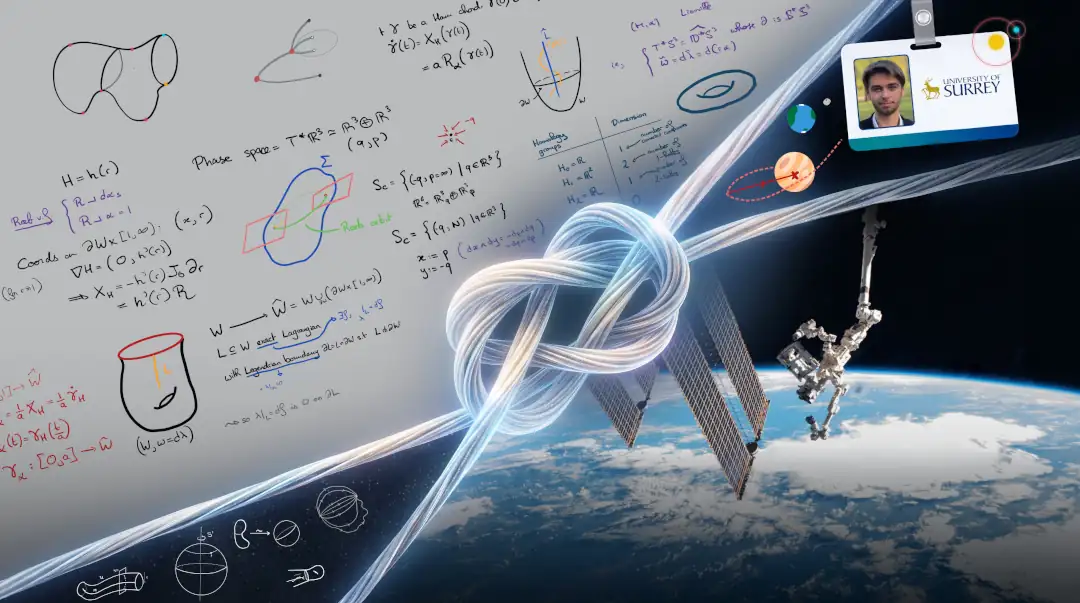
What if some of the next breakthroughs in space mission design came not just from engineering prowess, but from abstract constructions in pure mathematics?
Last summer, I explored one potential example of this idea, by talking about the infamous three-body problem, and a mathematical tool called Floer homology, which can be used to study it. As it turns out, this tool is but one of many amongst a powerful new arsenal of techniques coming from geometry, which experts have started calling the symplectic toolkit.
This toolkit is based on a branch of pure mathematics called symplectic geometry, and some of the leading research on how to apply its knowledge to space science is happening here in Heidelberg – along with Augsburg, and other research centres in countries such as South Korea, Spain, and the US.
Symplectic geometry is a branch of mathematics born from the combination of geometry and physics. Its purpose is to rewrite the equations of motion from classical mechanics (the equations that describe how bodies such as planets, pendulums, or projectiles move) in a more concise, coordinate-free way. This allows one to study physical systems from a different, more abstract perspective, and to use facts from geometry to learn new things about them.
The term “symplectic”, coined in 1939 by Hermann Weyl, comes from the Ancient Greek symplektikos, which stands for “intertwining”. The name reflects the subject’s origins in the concept of phase space, where position and momentum are treated as two inseparably linked parts of a system’s state.
Collaborations between symplectic geometry and space mission design have been steadily multiplying in the past few years, but they still remained isolated. In particular, the communities had never met at a dedicated workshop or conference.
Now they have.
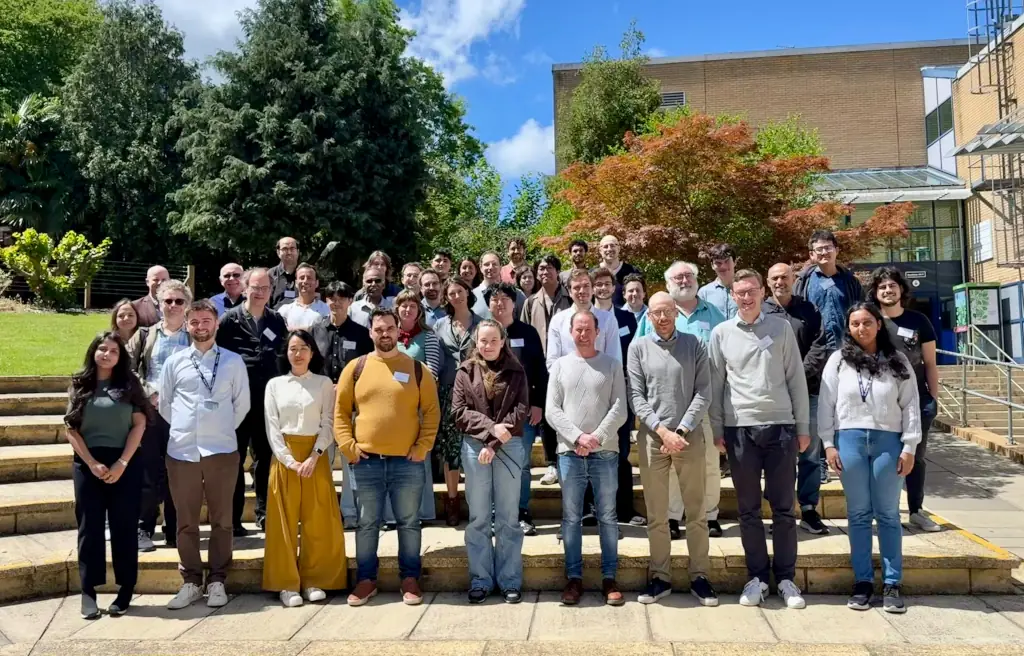
The story of how symplectic geometry came to be used in space science is long, and can be traced back all the way to Poincaré in the early 20th century, long before the word “symplectic” became an established mathematical term. However, the breakthrough we are interested in today dates back to the early 2010s, to work by Profs. Albers (now a Professor of symplectic geometry at STRUCTURES in Heidelberg), Frauenfelder, Hofer, Paternain, and van Koert. Their series of papers from 2011 to 2013 opened the door to a whole new array of symplectic geometry tools that could be used to study the three-body problem. This set of tools became known as the symplectic toolkit, and it has slowly been enriched over the years.
After my own PhD in Heidelberg, with J. Prof. Moreno, I wanted to try and help popularize these new ideas among the space engineering community. To this end, I joined the Surrey Space Centre, the only academic institution in the UK with A to Z space engineering capabilities: from satellite design to the processing of space data. There, I started working with Dr Nicola Baresi, a leading expert in orbital mechanics, who was instantly on board with the plan to organize a workshop.
As Dr Baresi from the Surrey Space Centre explains, the motivation was not simply to introduce one community to the other:
“Symplectic geometry and astrodynamics [the study of the motion of spacecraft] tackle similar unresolved questions in dynamical problems, such as the Circular Restricted Three-Body Problem. The Geometry Space Surrey workshop, instigated by Arthur, was really the first opportunity these two communities had to talk about their tools and brainstorm new applications for space mission design”.
Of course, bringing together two communities which had never met at large comes with its own lot of obstacles to overcome. The first, and maybe most obvious one, is the language barrier. Everyone with experience in cross-disciplinary work, be it mathematics and physics, physics and engineering, biology and chemistry, or even science and policy, has experience with this. Some of us are often working with the same tools, the same ideas, but calling them by different names.
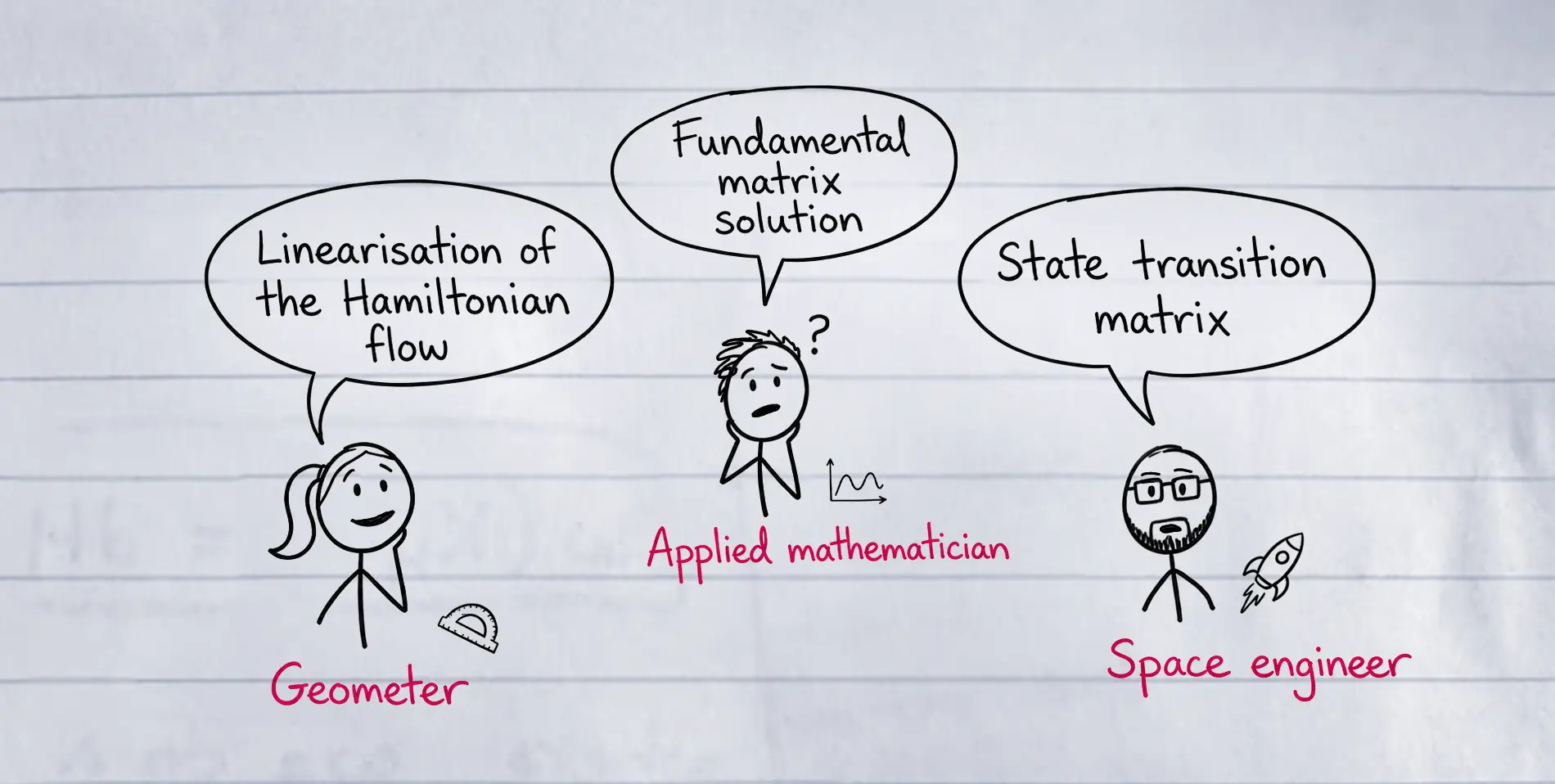
While this is by no means an insuperable barrier, and while it may almost seem too obvious to state, it is absolutely worth commenting on. Researchers working on a topic spend hours on the internet scouring through the scientific literature, in order to find new tools or ideas they could transpose in their own work. If other people from a different discipline are working on similar ideas but using different vocabulary, then new insights and solutions which could benefit one researcher may remain forever inaccessible to them, despite being one internet search away.
Fortunately, the best way to solve this problem is also the simplest: get people in the same room!
Let us look at one example of this phenomenon, and how breaking the language barrier produced unexpected new results. In the early 2020s, Agustin Moreno (now J. Prof. in Heidelberg) and Urs Frauenfelder (Prof. at the University of Augsburg) were working with a tool called GIT quotients. GIT stands for Geometric Invariant Theory, and GIT quotients are an abstract construction which we will not define here, because they are technical, and not particularly relevant to the discussion. The bottom line is that Moreno and Frauenfelder were using this tool to investigate orbits in the three-body problem, and under which conditions one could try and “connect” two orbits together.
“While we were working on this problem, we were contacted by Dayung Koh, a space mission design and navigation engineer in the US. Talking to her, we realized that our work with GIT quotients overlapped with famous orbital mechanics techniques, and recovered something engineers called Broucke’s stability diagram,” says Agustin Moreno.
Broucke’s stability diagram, developed in 1969 by Roger A. Broucke (aerospace engineer for NASA), is a tool which helps ascertain the stability of orbits, and is well known to space engineers.
“In other words, we rediscovered the diagram, put it into a different language, and extended it with a mathematical concept called the B-sign (Editor’s note: B-signs are mathematical labels one can attach to an orbit, which help distinguish different types of behaviours that Broucke’s original diagram alone does not capture). Then, with Dayung Koh, we put this work into practice, once we managed to get over the language barrier.”
Moreno and Frauenfelder’s work with Koh provided applications to the study of orbits of the Jupiter-Europa and Saturn-Enceladus systems. Both of these are of high interest to space scientists at the moment, due to the presence of sub-surface oceans under the crusts of Europa and Enceladus, which appear to be habitable.
The main lesson I learnt from Geometry Space Surrey is that if we want to facilitate collaboration, we should work on a “dictionary” translating between the two disciplines, with the help of both communities. This would allow us to reach an even wider audience, and open up the current research to the wider scientific community, ranging from aerospace engineering to pure mathematics, and to develop a shared understanding of tools and concepts.
This is work in progress for a hypothetical second edition of the symposium.
The workshop was organized in multiple “focus sessions”, with a clear theme and difficulty curve throughout the three days. For instance, Tuesday morning had a focus session on the three-body problem and computational geometry, with a keynote by J. Prof. Agustin Moreno, and talks by Dr Mike Henderson (IBM Research, retired) and Anabel Soria-Carro (University of Texas, Austin). Meanwhile, Tuesday afternoon hosted a focus session on Cislunar SSA (Space Situational Awareness).
Space Situational Awareness (SSA) refers to our abilities to track objects, whether human-made or not, and events in space, in order to protect our own assets (satellites, spacecraft, space stations, the Earth, …).
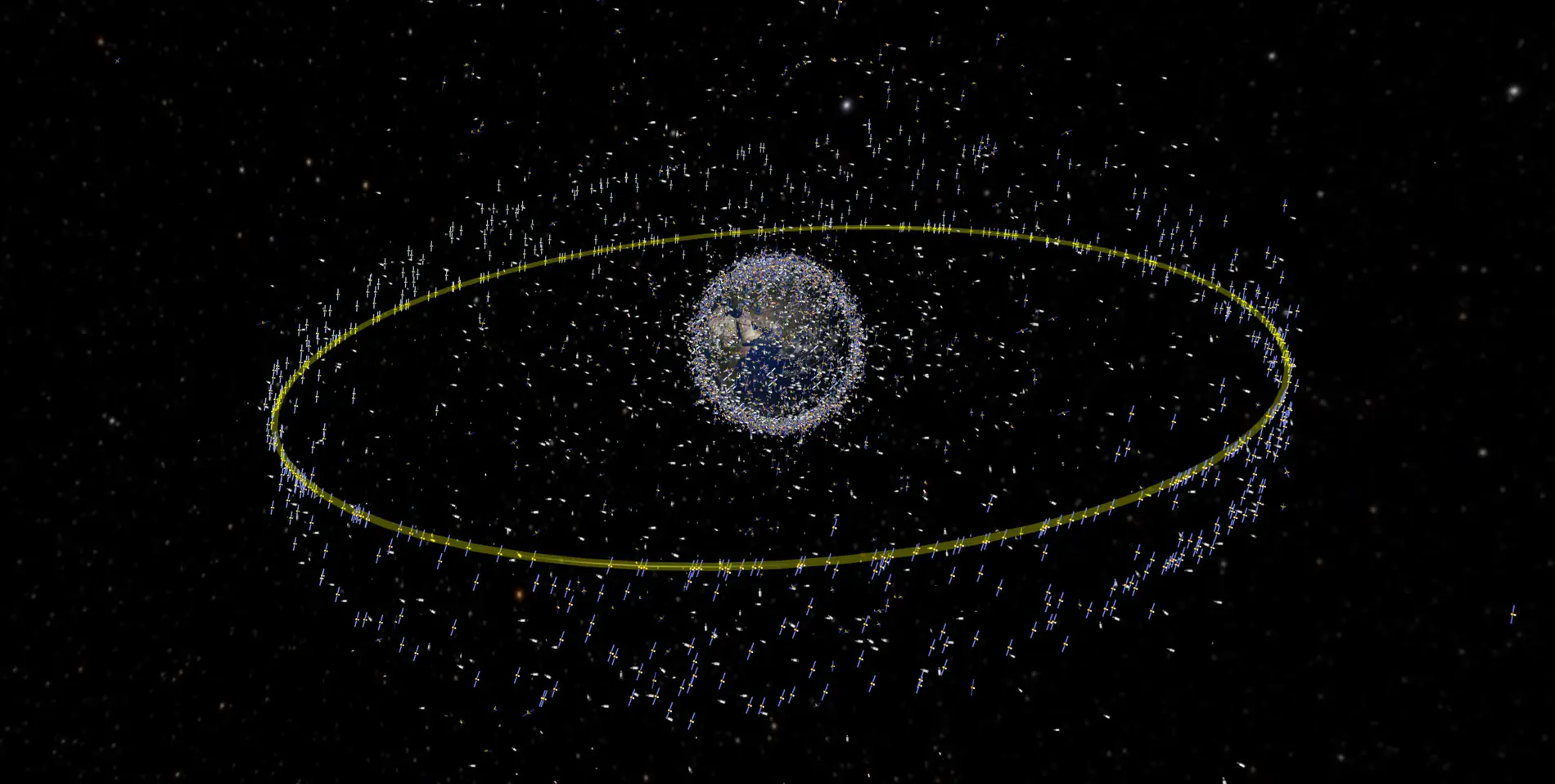
Our current tools for SSA, which have taken decades to develop, focus on where most satellites are: near Earth. This “near-Earth space” is usually split into three zones: Low Earth Orbit (less than 2,000 km above ground), Medium Earth Orbit (between 2,000 and 35,786 km), and Geostationary Orbit (35,786 km above ground).
Beyond these zones, we speak of cislunar space, “cislunar” meaning “between the Earth and the Moon”. Therefore, Cislunar SSA means the tracking of spacecraft and other objects in cislunar space – including objects orbiting around the Moon.
Research and development in cislunar SSA are ongoing efforts from the international space and defence communities, especially with the renewed interest in lunar missions. For example, the Artemis II mission, in April 2026, was successfully tracked all through its 9-day trip to the vicinity of the Moon, despite it going farther than any crewed space mission: 406,771 km from Earth.
A topic adjacent to space situational awareness, and one that held an important spot in the focus session, was that of space sustainability. Space is becoming increasingly congested, with the numbers of satellites and debris (from past missions, collisions and breakups) growing exponentially year after year. The choices we make now, both in terms of developing the technologies and making the right policy choices, will have a long-lasting impact on future generations.
A particularly important question of sustainability in cislunar space and medium Earth orbit was raised by Dr Jack Tyler (Civil Aviation Authority) and Dr Mar Giralt (ex-Observatoire de Paris, now Prof. Lect. at the Universitat Politècnica de Catalunya): the question of end-of-life disposal. In other words,
What do we do with satellites once they have outlived their use?
A modern spacecraft in Low Earth Orbit (less than 2,000 km above the Earth) will most often “de-orbit itself”. In other words, it will use the last drops of its fuel to lower itself into the atmosphere in what is called a controlled re-entry, where it will burn up in what looks a little bit like a fireworks show (see an example here).
At higher and higher altitudes though, it becomes more and more fuel-costly to de-orbit satellites into the atmosphere. Instead, they are put into “graveyard orbits”. For example, satellites in medium Earth or geostationary orbits (roughly 2,000 to 36,000 km above Earth) will often use the last of their fuel to raise their altitude by a few hundred kilometres and retire there. At these higher altitudes, scientists agree not to place important spacecraft.
For medium Earth orbits, Dr Giralt explored another possibility: using a phenomenon from symplectic geometry called Arnold diffusion. In simple terms, Arnold diffusion describes how some physical systems (nearly-integrable Hamiltonian systems) can sometimes wildly change under small disturbances. For example, Mar Giralt started from the orbits of Galileo satellites (Editor’s note: Galileo is the European equivalent of the American “GPS”, providing us with Position, Navigation, and Timing services), roughly 23,000 km above Earth, and she leveraged Arnold diffusion to make the orbits more and more elliptical. In practice, this means that a small manoeuvre (using the satellite’s thrusters to propel it in one direction) would allow the satellites to fly very close to Earth (at the points where the ellipse is thinnest), and hence re-enter the atmosphere in a fuel-efficient way.
The Moon, in contrast, has no atmosphere, so a satellite orbiting it cannot burn up on re-entry. Crashing it into the surface would raise concerns about preserving the lunar environment. Dr Tyler’s talk explored alternatives. Current options are: putting it in a graveyard orbit, sending it all the way back to Earth to burn up in its atmosphere, or sending it far, far away to never think about it again. All of these solutions have their pros and cons, and insights from symplectic geometry could greatly help us decide between them. Unlike common methods in space engineering, which provide detailed predictions within a limited region of space, symplectic geometry can offer a global view: how trajectories behave across a much wider region.
In short, how we address the ever-growing issue of space debris and pollution will be one of the next major challenges of the century, and will require strong political choices by the international community. These choices will need to be supported and informed by strong science being done today. Therefore, we must ramp up the effort in space sustainability research, and promote cross-disciplinary work between all branches of science, so as to find new ideas and maximize impact, in order to keep the space environment clean and usable for our descendants.
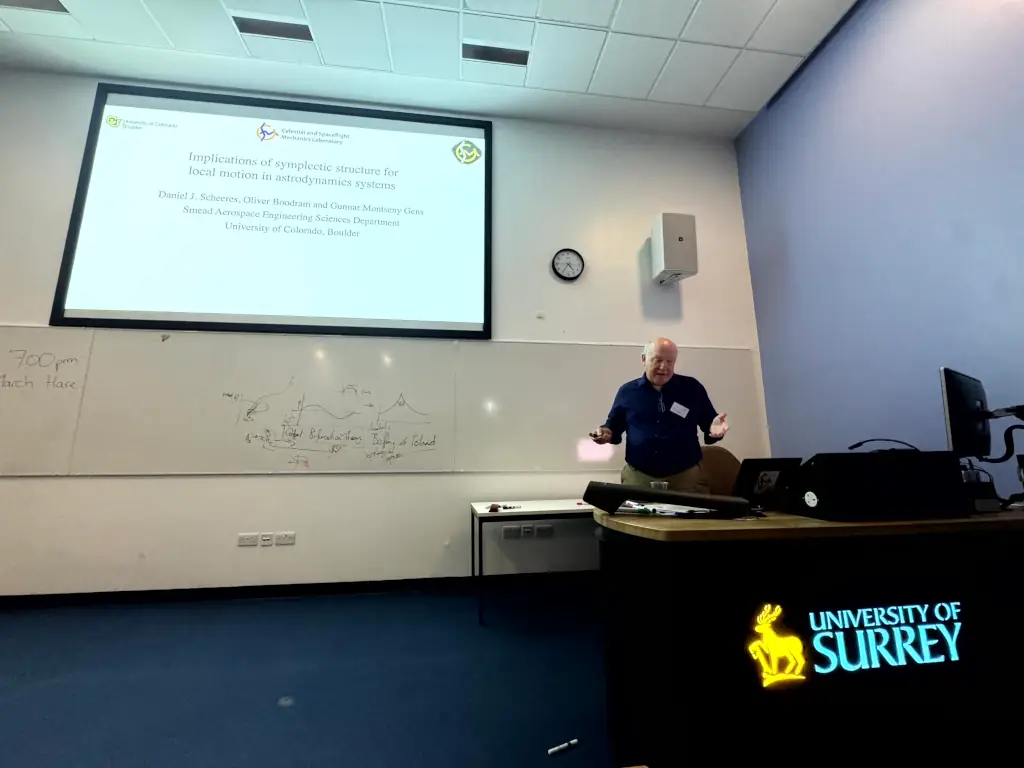
Prof. Daniel J. Scheeres (University of Colorado, Boulder), one of the world’s leading astrodynamicists, closed the discussions on Day 2 by making a list of important results from symplectic geometry, and showing ingenious ways they could be used in space mission design. This included some very abstract results like Gromov’s non-squeezing theorem, a famous theorem in symplectic geometry, which also gave birth to the legend of the symplectic camel.
Imagine a ball of radius $r$ in phase space (a $2n$-dimensional space where coordinates are position and momentum, which are in a way “coupled”). Gromov’s non-squeezing theorem says that one can only fit this ball into a cylinder of radius $R$ if $r \leq R$, if one wants to “preserve the rules of phase space”. This is surprising because usually, in geometry, one can shrink objects as much as one desires. It is easy to produce a map which fits the ball of radius $r$ in the desired cylinder, no matter how small $R$ is (just re-scale everything by $R/r$). One can even do so in a volume-preserving way, since the cylinder is infinite, by stretching the ball in one direction and shrinking it in the others.
Gromov’s theorem tells us that symplectic geometry does not allow for such shrinking, because the rules of phase space forbid it. In other words, such transformations in phase space still exist, but they have no physical meaning.
In a 2006 paper with Hsiao, Dan Scheeres used this concept to study uncertainty in spacecraft dynamics. Indeed, to study the uncertainty in the position and momentum of a satellite, one often uses a statistic tool called the covariance. One can visualize it geometrically, by associating to it an ellipsoid in $2n$-dimensional space, called the uncertainty ellipsoid. In their paper, Hsiao and Scheeres show that one can apply a slight variant of Gromov’s non-squeezing theorem to this ellipsoid, and find an upper bound for the radius of balls that can be symplectically embedded into it. This yields a lower bound for the covariance of position and momentum, quite similar to the one in Heisenberg’s uncertainty principle from quantum physics.
Finally, after a Friday morning about optimal control, for space debris removal and solar sailing, the last focus session of the workshop was on Floer homology. I will not try to define here this abstract tool from geometry, as this already took me the better part of my last STRUCTURES blog post, but it would be a shame to miss the opportunity to give a follow-up!
Four talks focused on Floer homology: first, Prof. Otto van Koert (Seoul National University) gave an introduction to the concept from a computational mathematics perspective. He discretized the problem, and explained how to implement it on a computer, and how it could be used to find trajectories in the three-body problem. This was followed by presentations from two of his collaborators, Drs Chankyu Joung and Dongho Lee, who used Floer homology to study bifurcations of certain types of trajectories, such as halo orbits (from the last blog post).
Finally, Dr Jagna Wiśniewska from the University of Augsburg talked about the two-boost problem. The idea is the following: can we fly a spacecraft from point A to point B by only using the thrusters twice? Once at the start, to get the spacecraft on a “transfer orbit”, and once at the end, to get off it. It is kind of as if the transfer orbit were a motorway powered by gravity. Once you drove your car onto it, you could turn off the engine, lay back (or go into cryosleep), and let gravity do the work. You would only have to wake up and turn the engine back on for the last mile (taking your exit and getting to your destination). Jagna Wiśniewska and collaborators used a variant of Floer homology to prove the existence of such transfer orbits, under some assumptions.
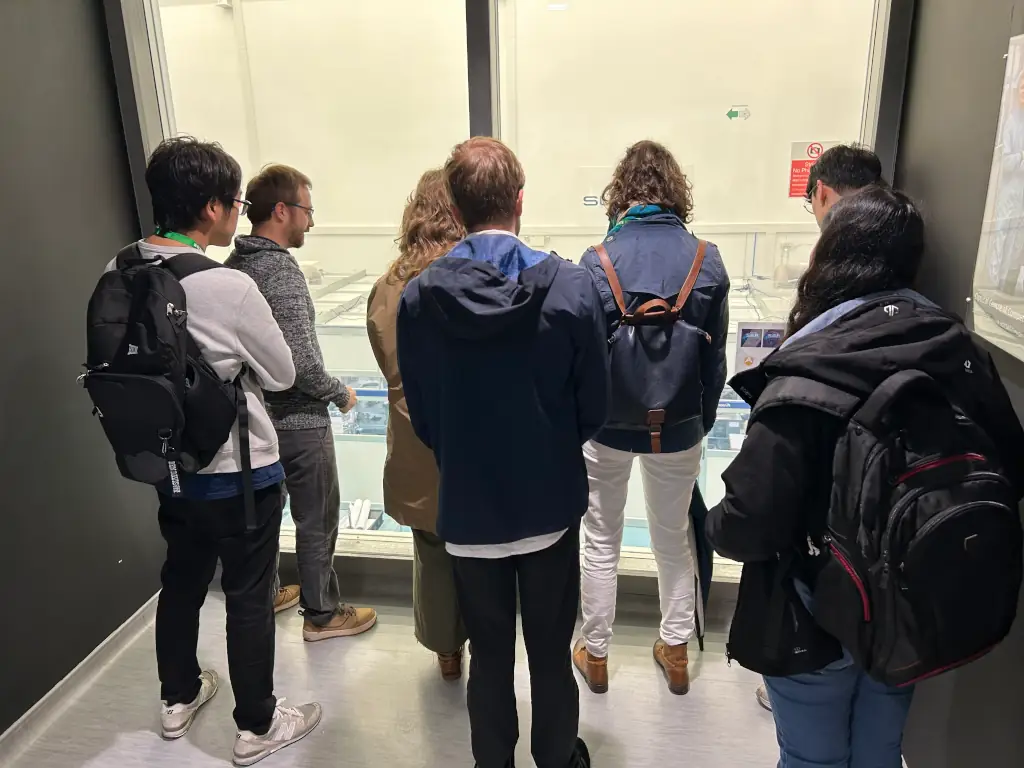
It became clear during these three-and-a-half days that there is a lot to be gained by getting two communities together. Indeed, while a single-community workshop is the perfect tool for deepening technical knowledge in one domain, such an event as Geometry Space Surrey helps formulate new questions, identify overlap between different disciplines, and find problems to collaborate on – as well as develop the tools to permit it.
A lot of discussions began which may turn into collaborations, which is one reason we are pushing for further editions of this workshop (maybe in other places than Surrey!), to get the communities together again, see how the research has progressed, and come up with new research questions. If you want to be kept updated on future editions, or read up in more detail on the workshop, please visit the webpage.
I said at the beginning that one work in progress is a “dictionary” between symplectic geometry and space engineering. Maybe, after the second edition, once we have taken the first steps and built the first bridge between the communities, we can work on a white paper compiling open problems… But that may be trying to look a bit too far into the future, and with a few hypotheticals too many.
On a personal note, I am very happy with how the event turned out. Organizing a workshop, building interest, finding the money, and coordinating with everyone were all firsts for me, and this made the reward even bigger. I found each and every one of the talks fascinating, and took a full notebook of notes which I will keep preciously, and which gave me a few ideas for my own future work.
I am very grateful to my co-organizers, Dr Baresi and Prof. Lloyd, and to STRUCTURES, for their incredible support for this event, as well as to all our other sponsors (Surrey Space Centre, School of Mathematics & Physics, Institute of Mathematics & Its Applications). Most of all, though, I am very grateful to all the participants for the fascinating discussions we have had throughout the event, the energy they all put into taking a step towards the other community, to try to learn about their work, and to form new research partnerships and friendships.
Now, because I have been the only one talking in this blog post, I want to leave a few words to some of our participants, as well as to Dr Nicola Baresi, a fantastic person to work with, and without whose support the workshop would not have been possible.
About the Author:

Arthur Limoge is a former young researcher from STRUCTURES, who completed his PhD in mathematics at Heidelberg University in December 2025. Since then, he has taken up a position at the Surrey Space Centre, where he has been working on popularizing tools from symplectic geometry among the space engineering community. His current interests involve the use of geometry in celestial mechanics, and space policy.
Tags:
Mathematics
Geometry
Topology
Space Engineering
Astrophysics
Planets
Learn more about STRUCTURES and its projects on the main website.
Get to know the team behind this blog.